 Why Israel
 Tech Ecosystem
 Human Capital
 Focus Sector
 The Health Network
 Business Opportunities
 Investment in Israel
 Innovation Diplomacy
 Leadership Circle
 Our Building
 Newsletter
 From The Press
 Startup Terms Glossary
 Tech Event Calendar


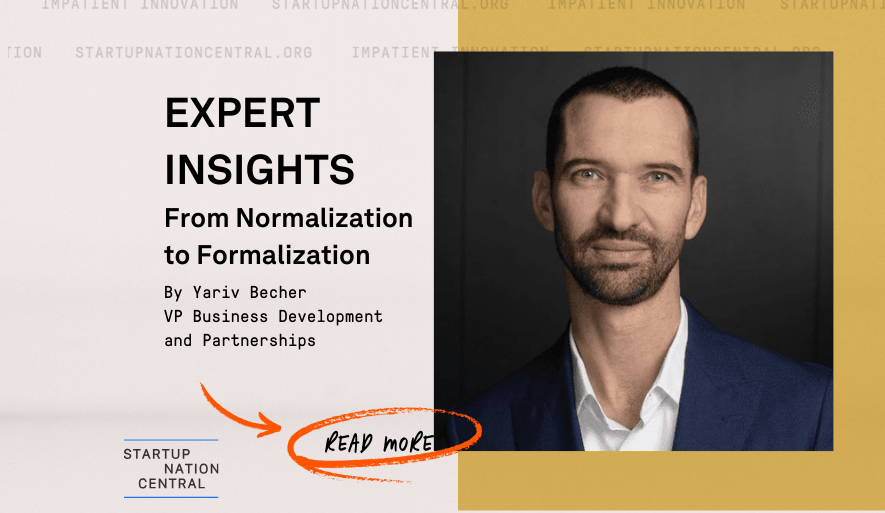
In times of noise and volatility, short term developments tend to overshadow long term trends. While daily occurrences require attention and reaction, we should not lose sight of historic trajectories and risk missing the direction in which things are moving.
Over the past two years, the Middle East has experienced unprecedented events that have challenged existing assumptions about what the future holds. Normalization between Israel and Saudi Arabia seemed just around the corner, and broader expansion of the Abraham Accords was the talk of the day. Much has happened since, and with growing tensions in the Arabian Gulf, such conversations may now seem somewhat disconnected from reality.
But they are not.
If we take a step back and look at the wider picture, it becomes clear that these expectations have not disappeared. Their probability remains high. The structural drivers, economic diversification in the Gulf, Israel’s technological strengths, and shared strategic interests, are still in place.
First, we should look at the existing, no longer new, relationships. Despite the challenges and adversity they have faced, the formal diplomatic ties established by the Abraham Accords remain intact and are gradually getting back on track. The recent past has left its mark. As my high school history teacher used to say, no matter how much you iron a crumpled piece of paper, the marks remain. Yet we are witnessing people on both sides moving past those marks, engaging, and doing business.
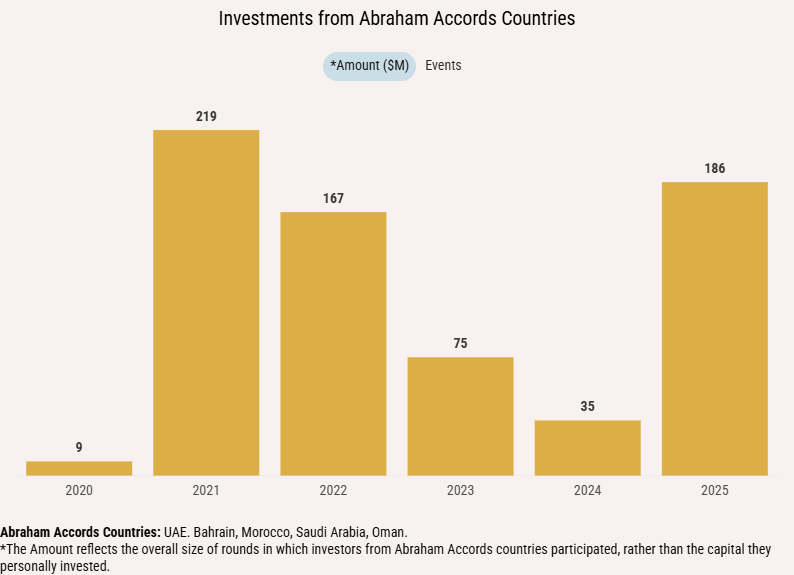
Moreover, with all the sensitivities, complexities, and necessary caution, we see movement between Israel and Saudi Arabia. While not overt and not yet direct, Israeli tech companies are visiting the Kingdom and interacting with partners on the ground. Saudi capital is beginning to trickle, not yet flow, into Israeli startups and venture capital firms. As one geopolitical researcher recently put it, “Normalization already exists. We are waiting for formalization.”
With that in mind, the question we should ask ourselves is not whether normalization will happen or when. Rather, it is what we should be doing now to make it successful.
Normalization is a political step. Integration is an economic process.
To answer that question, we should look back at the first round of the Abraham Accords and examine what lessons can be learned and implemented. As soon as the agreements were signed in 2020, the floodgates opened. Israelis swamped Dubai and Abu Dhabi in search of opportunities. At the same time, Emiratis were ready to welcome Israeli technology companies that would expand their activity and establish offices in the UAE.
The anticipation of high-volume deal making and rapid partnership formation was met with frustration at the slower pace of progress.
In hindsight, this was not surprising. After decades of separation and limited direct contact, accompanied by heightened geopolitical tensions, the initial phase of engagement revealed four “misses.”
Mistrust. Despite good intentions on both sides, existing perceptions shaped by regional politics and conflict dynamics remained. It was not necessarily a lack of faith, but a lack of familiarity. Trust takes time to build. Much like Western societies, Israelis are accustomed to building trust by doing business. In the Gulf, business is often conducted after trust has been established.
Misunderstanding. Words have dictionary definitions, but their meaning can shift within a cultural context. Israelis have been doing business with Americans for years and still navigate the nuances of when “interesting” truly means interesting and when it politely means “no, thank you.” Israeli directness and bluntness are often misinterpreted as disrespect or impatience.
Misexpectations. Almost immediately after the Accords were announced, even before they were fully implemented, Israeli startups boarded flights to the UAE expecting to be greeted by investors with open checkbooks. On the other side, officials and business leaders were expecting innovative, cutting-edge startups that, once exposed to what the UAE had to offer, would relocate to Abu Dhabi or Dubai. Both sides overestimated the speed of change.
Misalignment. Successful business partnerships depend on shared goals and compatible structures. Israeli tech is largely venture capital oriented, smaller scale, long term, and high risk, high return. Many Emirati investment practices evolved around infrastructure enterprises, large scale, steady income, lower risk. An early-stage startup raising a $10 million round does not naturally align with an investor structured to deploy minimum checks of $100 million.
None of this suggests a lack of potential. On the contrary, the potential for collaboration remains significant. There is much that can be done to create mutually beneficial partnerships. It simply requires time, clearer expectations, and better alignment of goals and structures.
More importantly, these lessons should be applied before formal ties between Israel and Saudi Arabia are established. If there is a second phase of the Abraham Accords, it should be more prepared, more calibrated, and more realistic than the first. Governments may sign agreements, but ecosystems determine outcomes.
Normalization is already present in practice, and formalization will likely follow. The period in between should be used to build the foundations that bridge existing gaps. We should share data and information about both ecosystems. We should help both sides understand how decisions are made and what to expect in real interactions. Mapping both communities and helping them navigate each other is essential to increasing the chances of success in the next phase of regional cooperation.
Lessons of the past only have value if they are implemented in the actions of the future.