
 Why Israel
 Tech Ecosystem
 Human Capital
 Focus Sector
 The Health Network
 Business Opportunities
 Investment in Israel
 Innovation Diplomacy
 Leadership Circle
 Our Building
 Newsletter
 From The Press
 Startup Terms Glossary
 Tech Event Calendar


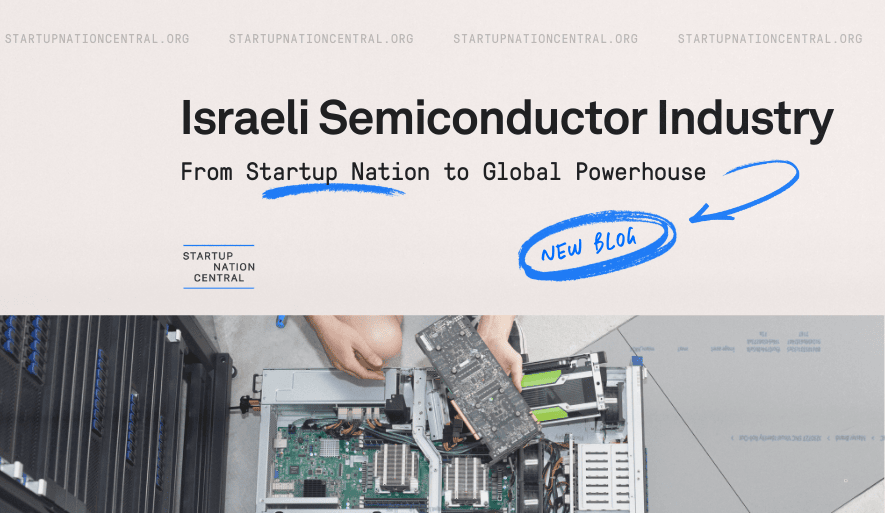
The Israeli semiconductor industry didn’t achieve success with one defining moment. It took shape through steady engineering work, long term focus, and a national mindset that treats complex problems as invitations rather than barriers. From small R&D rooms in Haifa and Jerusalem to today’s advances in AI acceleration and photonics, the country built an industry that now shapes how the world computes. Israeli teams contribute to the chips that train large AI models, the networking that drives supercomputers, and the inspection systems that keep advanced fabs on track.
A Brief History of the Israeli Semiconductor Industry
Israel’s semiconductor journey reflects a timeline of decisions, experiments, and breakthroughs that created lasting strength in design, architecture, and advanced systems.
Early Foundations: Intel, Motorola, and National Vision
The modern era began in the 1970s when Intel opened its development center in Haifa. It was Intel’s first site outside the United States and it embedded Israel inside the company’s global roadmap from the start. Motorola soon established its own semiconductor activity, which later evolved into Tower Semiconductor. These early moves shaped a generation of engineers and trained teams that understood both device physics and system-level requirements.
By the 1980s and 1990s, Israel was not only designing chips, but it was also fabricating them. Intel’s fabs in Jerusalem and later Kiryat Gat created thousands of skilled jobs and established a strong industrial workforce. Public agencies recognized the opportunity and invested in education, infrastructure, and incentives. The initial layers of the Israel semiconductor industry were set well before the global tech world noticed.
The Startup Nation Era
As Israel’s broader tech sector grew, the semiconductor industry developed a personality of its own. Local founders built companies that were small but highly specialized:
- Galileo Technology advanced system-on-chip integration, developing switching and routing silicon that improved throughput and reduced power.
- M Systems created the building blocks of modern flash storage that proved solid-state memory could replace mechanical storage in mobile devices and eventually in large scale systems.
- Saifun Semiconductors advanced nonvolatile memory IP through its NROM technology, improving density, endurance, and manufacturing simplicity.
- Tower expanded niche manufacturing capabilities by focusing on analog, RF, CMOS image sensors, and power management processes.
Each success fed new founders, new ideas, and new capital.
By the time Mobileye redefined automotive perception and Mellanox set the pace for high-speed data center networking, Israel had already become an essential partner to the global industry. The acquisitions of Mobileye and Habana Labs reinforced the pattern: Israeli companies could deliver fundamental technology at global scale.
Global Prominence and Strategic Partnerships
Israel’s position in the global semiconductor ecosystem grew steadily as multinational companies realized that the country’s engineering culture could support deep, complex R&D programs.
Where the World Designs Its Chips
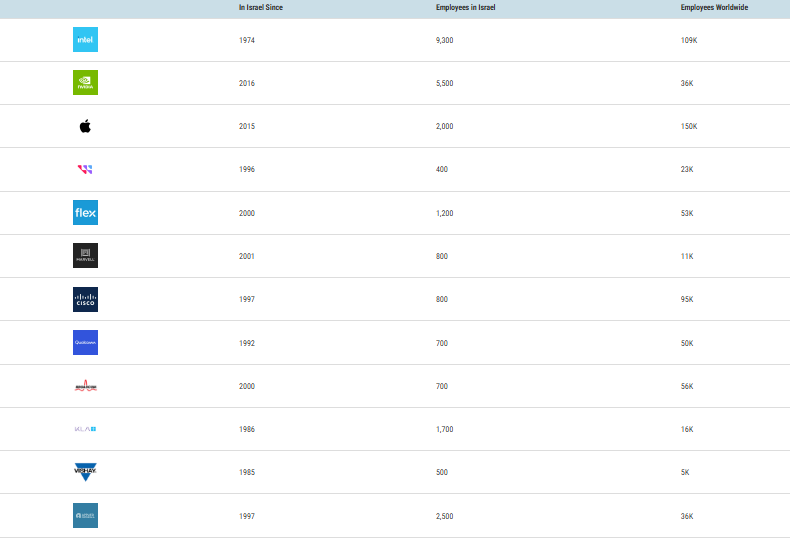
Israel has become a core development hub for the world’s leading technology companies. Case studies that illustrate this footprint include:
- Intel develops key elements of its Gaudi AI processors in local labs
- Nvidia relies on expertise gained through the Mellanox acquisition to lead high speed networking
- Apple uses Israeli teams for sensing and storage innovations
- Amazon builds its custom Graviton processors and AI accelerators on the foundation created by Annapurna Labs
- Microsoft developed its Cobalt CPU and Maia accelerator in Haifa
This presence grew because Israel consistently delivered advances in efficiency, bandwidth, thermal performance, and inspection. As a result, the Israel semiconductor industry became a central part of global chip design and verification work.

“Israel’s advantage lies in its people and culture of innovation. Decades of experience in design, project execution, and system architecture have created a unique foundation.“
Eyal Waldman
Chairman Waldo Holdings & Co-founder Mellanox
Two Engines Driving One Ecosystem
Israel’s semiconductor strength comes from two engines that run side by side. The multinational R&D centers bring long horizon programs, global standards, and advanced toolchains. They train engineers on projects that influence worldwide roadmaps. Many of these engineers later move into startups or become senior leaders across the ecosystem.
The startup engine focuses on the areas where small, experienced teams can make meaningful breakthroughs, including AI acceleration, photonics, interconnects, and inspection. Some companies scale on their own, others integrate into multinational operations, but in both paths the expertise remains in Israel. This cycle of talent, insight, and specialization is what makes the Israel semiconductor industry resilient.
Why Investors Back the Israeli Semiconductor Industry
Investors continue to support Israeli semiconductor companies because the technologies built here often solve foundational problems in compute and data infrastructure. These companies address the challenges that define performance, not the features that sit on the surface.
Three factors drive investor confidence:
- First, Israeli semiconductor startups often raise larger rounds because they work on capital-intensive problems that demand deep technical skill.
- Second, their IP tends to sit in critical parts of global systems, including AI clusters and advanced manufacturing lines.
- Third, multinational engagement validates the ecosystem and supports repeat founders with proven track records.
Israel attracts one dollar in semiconductor VC investment for every five dollars invested in the United States. For a country of its size, this ratio is extraordinary and reflects how consistently the Israel semiconductor industry produces technologies that matter.
Startup Nation Finder Israeli Semiconductor Industry Map
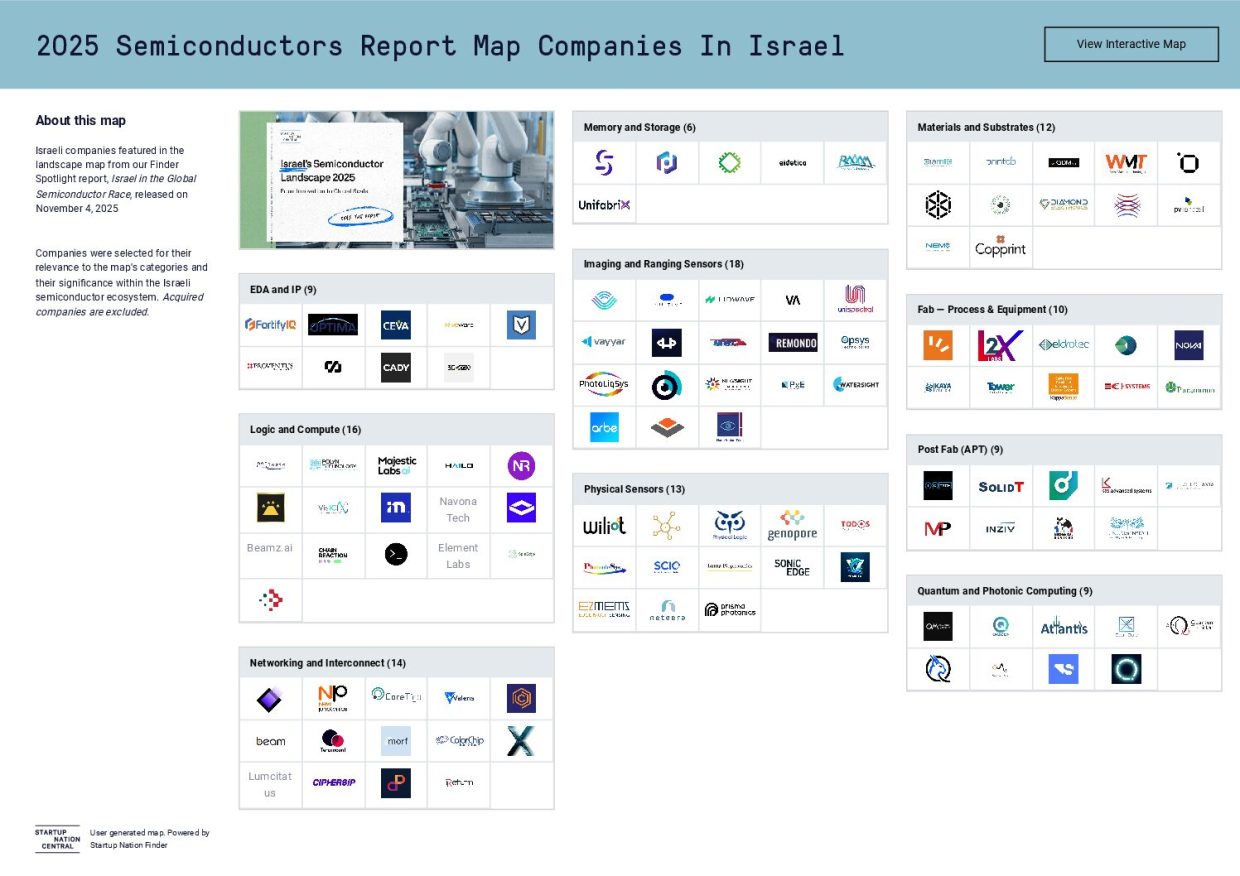
The 2025 Israeli Semiconductor Landscape Map captures the depth and range of companies shaping the Israeli semiconductor industry. It brings together startups and mature players working across design, fabrication, inspection, materials, packaging, and advanced computing. The map shows how Israel’s strengths in chip architecture, AI acceleration, interconnects, sensing, and specialty manufacturing form a connected ecosystem rather than isolated breakthroughs. It also highlights the balance between long standing public companies, emerging deep tech ventures, and the multinational R&D centers that anchor the industry’s growth. Click to explore.
Challenges Ahead: Scaling Beyond the Exit
Israel built its semiconductor reputation through innovation and through exits that drew global attention. Mobileye, M Systems, Mellanox, and Annapurna Labs created enormous value and helped build the next wave of founders. The challenge now is to shift from a pattern of early acquisition to one where Israeli companies scale independently and anchor long term economic and strategic value.
Early exits move ownership and decision making across borders. This makes Israel more dependent on foreign corporate strategies and reduces the number of local companies that can grow into global competitors. At the same time, the number of new semiconductor startups has declined because of long development cycles, high tooling costs, and intense competition.
To sustain momentum, Israel needs infrastructure that supports every stage of chip development. Key steps include:
- Access to shared EDA tools that lower early engineering costs
- Prototyping facilities that shorten development cycles
- Packaging and system integration capabilities that reduce dependence on external partners
- Public procurement in defense, mobility, and energy that helps validate new technologies early and builds momentum for global adoption
This combination of national investment, patient capital, and early customers can strengthen the pipeline and give semiconductor startups the longer runway required to reach meaningful scale.
The Future: AI, Quantum, and Beyond Silicon
Computing is approaching physical limits, and the next wave of innovation will depend on new materials, new architectures, and new approaches to system design. Israel is positioned to play a significant role because its engineers and researchers have long experience with the physics, algorithms, and architectures that sit beneath modern computing. Several emerging areas stand out:
- AI acceleration that reshapes how data centers manage power and workloads
- High speed networking that becomes more critical as AI clusters scale
- Photonics that offers new ways to overcome data movement limits
- Quantum computing that advances through both research and commercial prototypes
These fields reward precision and curiosity, qualities that have shaped the Israel semiconductor industry for decades.
Building to Last
The Israel semiconductor industry is entering a phase where long term planning matters as much as short term breakthroughs. The foundation is strong, the talent is deep, and the global partnerships are meaningful. The next step is to increase the number of companies that scale independently, own their roadmaps, and carry Israeli innovation into global markets from a position of strength.
With the right mix of patient capital, national infrastructure, and sustained commitment to long horizon research, Israel can continue shaping the future of computing and turn its semiconductor industry into an enduring global anchor rather than a source of early-stage acquisitions.