 Why Israel
 Tech Ecosystem
 Human Capital
 Focus Sector
 The Health Network
 Business Opportunities
 Investment in Israel
 Innovation Diplomacy
 Leadership Circle
 Our Building
 Newsletter
 From The Press
 Startup Terms Glossary
 Tech Event Calendar
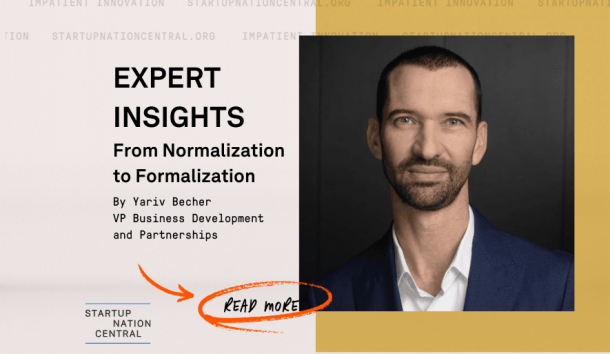
For much of my career, the Middle East has been described through the lens of politics. Borders, conflicts, and negotiations have shaped how the region is understood from the outside, and often from within. Politics still matter, but it no longer explains everything that is happening here.
Five years after the signing of the Abraham Accords, another layer of the region is becoming clearer. It is shaped less by declarations and more by daily work. People across the Middle East are collaborating around shared challenges, building companies, modernizing systems, and creating economic links that did not exist before. That reality is the foundation of Middle East Tomorrow, a project led by Startup Nation Central and produced for broadcast on Fox News.
This project doesn’t promote an idea or advocate for a policy. It highlights a pattern we see consistently in our work; cooperation grows when it delivers value.
Why This Story Matters Now
At Startup Nation Central, our mission is straightforward. We work to connect Israeli innovation with regional and global needs in ways that create lasting economic and social value. That work is grounded in practice, not theory. Most of it happens quietly, through conversations, partnerships, and problem solving that rarely make headlines.
Over the past five years, the pace and openness of regional engagement have changed. The Abraham Accords created space for collaboration to happen more openly and at greater scale, but required people willing to invest time, trust, and effort into building something concrete together.
We felt there was value in stepping back and documenting what has actually emerged; not the agreements themselves, but the human activity they enabled. Middle East Tomorrow is an attempt to make that layer visible.
A Civil Lens on Regional Change
The series was designed as a civil initiative from the beginning. Rather than analyzing diplomacy or revisiting negotiations, it looks at how cooperation shows up in real life.
Each episode focuses on individuals working in technology, sustainability, health, education, entrepreneurship, and culture. These are people dealing with water scarcity, climate stress, health system pressure, food security, and digital infrastructure. These are all challenges that cross national borders, and the responses increasingly do as well.
By focusing on people rather than institutions, the series reflects how progress takes hold when cooperation becomes durable and useful, and usefulness is easiest to see at the human level.
Innovation as a Working Method
In my conversation with Megan Alexander, the discussion naturally centered on innovation as a practical tool.
Innovation has a grounding effect. It moves conversations away from ideology and toward outcomes. Engineers, scientists, founders, and operators tend to ask similar questions regardless of where they come from. What problem are we solving? Does the solution work? Can it scale responsibly?
That mindset is particularly relevant in the Middle East, where many of the most pressing issues are shared. When people collaborate around these challenges, trust develops through action and consistency rather than rhetoric.
Economic Convergence Across the Region
Another reason cooperation is gaining traction is economic reality. Across the Middle East, countries are working to diversify economies that have long depended on natural resources. The shift toward knowledge-based growth is driven by demographics, competitiveness, and long-term resilience.
Israel’s experience offers an important reference point in this transition. Building a technology-driven economy under constraints forced an emphasis on efficiency, adaptability, and applied innovation. Over time, this produced capabilities in areas that are now priorities across the region, including digital health, water management, agri-food technologies, cybersecurity, and climate solutions.
Regional partners bring different strengths to the table, including scale, capital, infrastructure, and execution capacity. When these capabilities intersect, collaboration becomes practical and outcome-driven.
Startup Nation Central’s role is to help connect these complementary strengths where shared value is clear.
Filling the Space Between Agreements and Impact
The Abraham Accords created political space, but space alone does not create cooperation. Sustainable collaboration depends on people who are willing to work together repeatedly, often without certainty, and with a focus on shared outcomes.
Our approach reflects that reality. We focus on direct relationships and concrete projects. These connections tend to persist because they solve real problems. When cooperation delivers value, it continues regardless of political cycles. Middle East Tomorrow captures this.
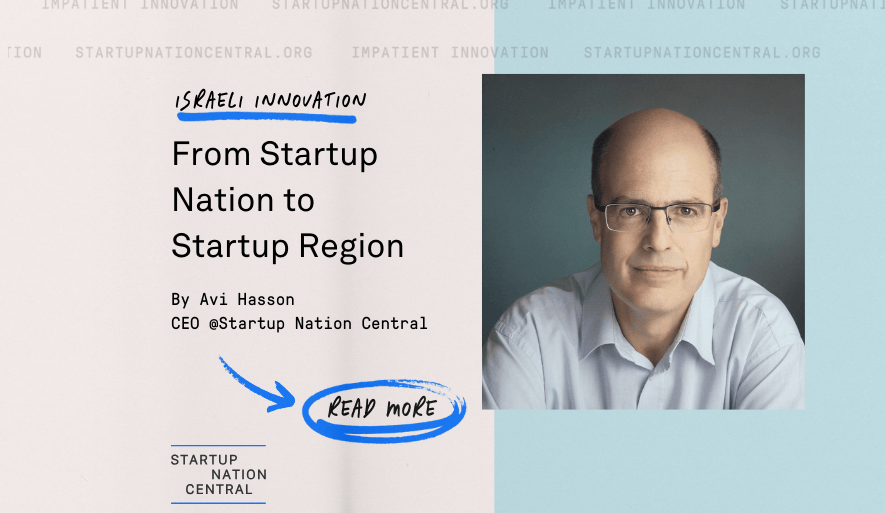
From Startup Nation to Startup Region
The idea of moving from Startup Nation to Startup Region describes a shift we are observing in real time.
Innovation in Israel is a national story, and increasingly is part of a regional one. Knowledge flows across borders. Technologies developed in one country are implemented in another. Partnerships are designed from the outset with multiple markets in mind.
We are not about exporting a model; we are problem solving in partnership with the other countries in the region facing shared pressures.
Measured Optimism
I am optimistic about the future of the region, but that optimism is grounded in what I see happening on the ground. The Middle East remains complex: political tensions persist, and economic transitions are uneven. These conditions cannot be ignored.
What is changing, however, is people choosing cooperation. Innovation provides a framework that makes this emerging collaboration practical and repeatable, and creates incentives aligned around progress.
Why We Chose to Tell This Story
This story matters because it reflects how change is actually taking root.
Middle East Tomorrow offers a grounded view of a region in transition. For us at Startup Nation Central, this aligns with our mission to strengthen connections, share knowledge, and enable collaboration where it creates real impact.
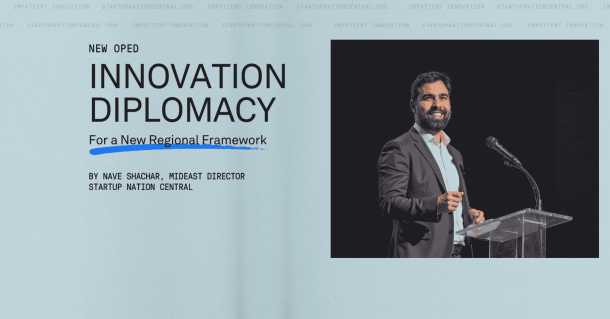
The most resilient foundations for the future are built when people work together on common goals. Innovation doesn’t remove differences, but it gives people a reason to move forward despite them. We call this strategic approach to regional cooperation innovation diplomacy.